- Harpic, the most widely used toilet cleaner in India, contains approximately 10% hydrochloric acid (HCl). Inhaling its fumes in a small, poorly ventilated Indian bathroom causes measurable respiratory irritation within minutes.
- Most Indian cities have water TDS between 250 and 800 ppm. This hard water creates limescale that baking soda cannot remove. Acid is required, but it does not need to be hydrochloric acid.
- Baking soda and vinegar cancel each other out when mixed. They produce water, CO2, and sodium acetate. The fizzing looks powerful but achieves almost nothing. Use each one separately.
- A citrus bio-enzyme cleaner made from fruit peels, jaggery, and water costs almost nothing, ferments in 30 to 40 days, and works on soap scum, organic stains, and odours across every bathroom surface.
Switching to a natural bathroom cleaner in India is harder than it sounds, not because effective alternatives do not exist, but because most DIY recipes circulating online were not written for Indian bathrooms. They do not account for the hard water that leaves white mineral crust on every tap and tile in cities like Delhi, Bengaluru, and Hyderabad.
They do not name what is actually in Harpic or Domex. And they almost never explain why baking soda, the most recommended ingredient in eco cleaning guides, does nothing to the specific staining that Indian bathrooms develop. This guide fixes all three gaps.
It covers every bathroom surface with the right natural cleaner for each one, includes a citrus bio-enzyme recipe you can make from kitchen scraps, and gives a neutral price comparison of Indian eco cleaning brands
In This Article
Why Natural Bathroom Cleaners Are Safer for Indian Homes
Harpic, India’s top-selling toilet cleaner, contains approximately 10% hydrochloric acid (HCl) as its primary active ingredient. A peer-reviewed case report published in the US National Library of Medicine describes Harpic’s safety classification as skin corrosion (Category 1B), serious eye damage (Category 1), and specific target organ toxicity via respiratory tract irritation (Category 3). These classifications apply to the product sitting under most Indian bathroom sinks right now.
Domex, the second most common Indian bathroom cleaner, uses sodium hypochlorite (bleach) as its active ingredient. Research published in Environmental Science and Engineering measured hypochlorous acid (HOCl) concentrations above 10 ppmv near a bathroom surface during standard bleach cleaning, with elevated levels persisting more than one metre from the surface for up to 40 minutes after application. Neither product is used in a well-ventilated lab. Both are used in bathrooms with a small exhaust fan, or no ventilation at all.
Quick Fact
In India, household cleaning agents are the second most common source of chemical poisoning after agricultural pesticides. A study found household cleaning products accounted for 25.3% of poisoning cases in Ahmedabad, nearly matching agricultural pesticides at 28.5%. Toilet cleaners were the most common cleaning agent involved.
Before You Start: Why Indian Hard Water Changes Everything
Most natural bathroom cleaning recipes online originate from the UK, US, or Australia, where municipal water TDS is typically below 200 ppm. In India, most cities sit considerably higher: Delhi NCR from 400 to 800 ppm, Hyderabad from 250 to 700 ppm, Chennai from 300 to 600 ppm, Bengaluru from 200 to 500 ppm, and parts of Punjab and Haryana above 800 to 1,500 ppm.
High TDS means high dissolved calcium and magnesium salts. These deposit on tiles, taps, and toilet bowls as white chalky limescale or brown mineral scale. Baking soda is mildly alkaline (pH ~9) and does nothing to dissolve these deposits. Only an acid breaks down limescale, because the deposits are themselves alkaline calcium carbonate. White vinegar (5% acetic acid), citric acid, and citrus bio-enzymes all work. The 10% HCl in Harpic also works, but so does a tablespoon of citric acid powder dissolved in 500ml of water, without the fumes.
Tip
White vinegar for bathroom cleaning should always be used undiluted for limescale removal. Diluting it drops the acetic acid concentration below the threshold needed to dissolve calcium carbonate. Apply full-strength, leave for 10 to 15 minutes, then scrub and rinse.
Surface-by-Surface Guide
The Toilet Bowl
What builds up: mineral staining, uric acid deposits (the yellowish-brown ring), organic residue. What works: pour undiluted white vinegar or a citric acid solution (2 tbsp citric acid powder in 500ml water) around the rim. Leave for 15 minutes, scrub with a toilet brush, and flush. For stubborn rings, leave the solution overnight. Baking soda alone does nothing here because the deposits require an acid to dissolve.
Ceramic Tiles and Grout
What builds up: soap scum, hard water spots, and fungal growth in grout lines, common in high-humidity Indian bathrooms. What works: a baking soda paste (2 tbsp baking soda with just enough water to form a paste) applied to grout lines, left for 10 minutes, then scrubbed with an old toothbrush. This is one place baking soda genuinely works, because it acts as a mild abrasive and the target is not mineral-based. For hard water spots on glazed tiles, spray undiluted white vinegar, leave 5 minutes, and wipe off. Do not use vinegar on marble or granite tiles. Acid etches natural stone permanently.
Chrome Taps and Fittings
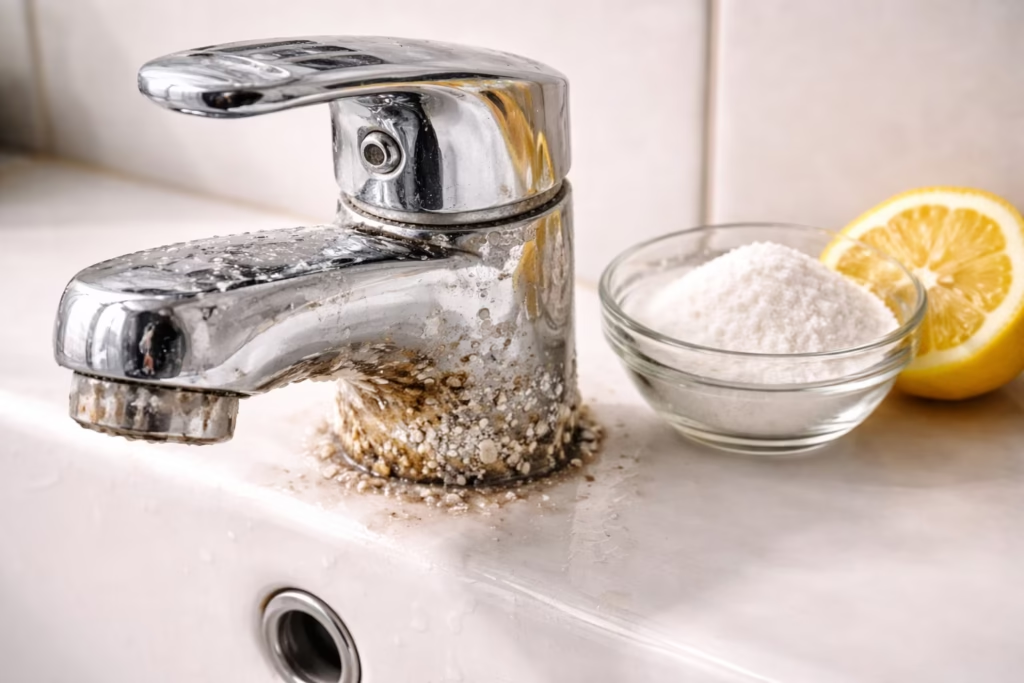
What builds up: white mineral crust around taps and showerheads, hard water spots on chrome. What works: soak a cloth in undiluted white vinegar and wrap it tightly around the fitting. Leave for 30 minutes. The crust wipes off with gentle pressure. For rust staining from overhead tanks, apply fresh lemon juice and leave for 10 minutes before rinsing. Do not scrub chrome fittings with baking soda paste. The abrasive particles scratch chrome plating over time.
Bathroom Mirror and Glass
What builds up: hard water spots, soap spray, fingerprints. What works: equal parts white vinegar and water in a spray bottle. Apply, then wipe with a crumpled newspaper page or a dry microfibre cloth. This performs better than most commercial glass cleaners, leaves no streaks, and costs under Rs 5 per clean.
Plastic Bucket and Mug
What builds up: yellow mineral staining, soap residue, occasional algae near the floor drain. What works: fill the bucket with water and add 3 tbsp citric acid or 200ml white vinegar. Leave for 1 hour, scrub with a brush, and rinse. For stubborn yellow staining, apply a baking soda paste after the acid soak, scrub, and rinse. The acid loosens the mineral scale; the baking soda then removes the softened residue as an abrasive.
How to Make a Citrus Bio-Enzyme Cleaner at Home
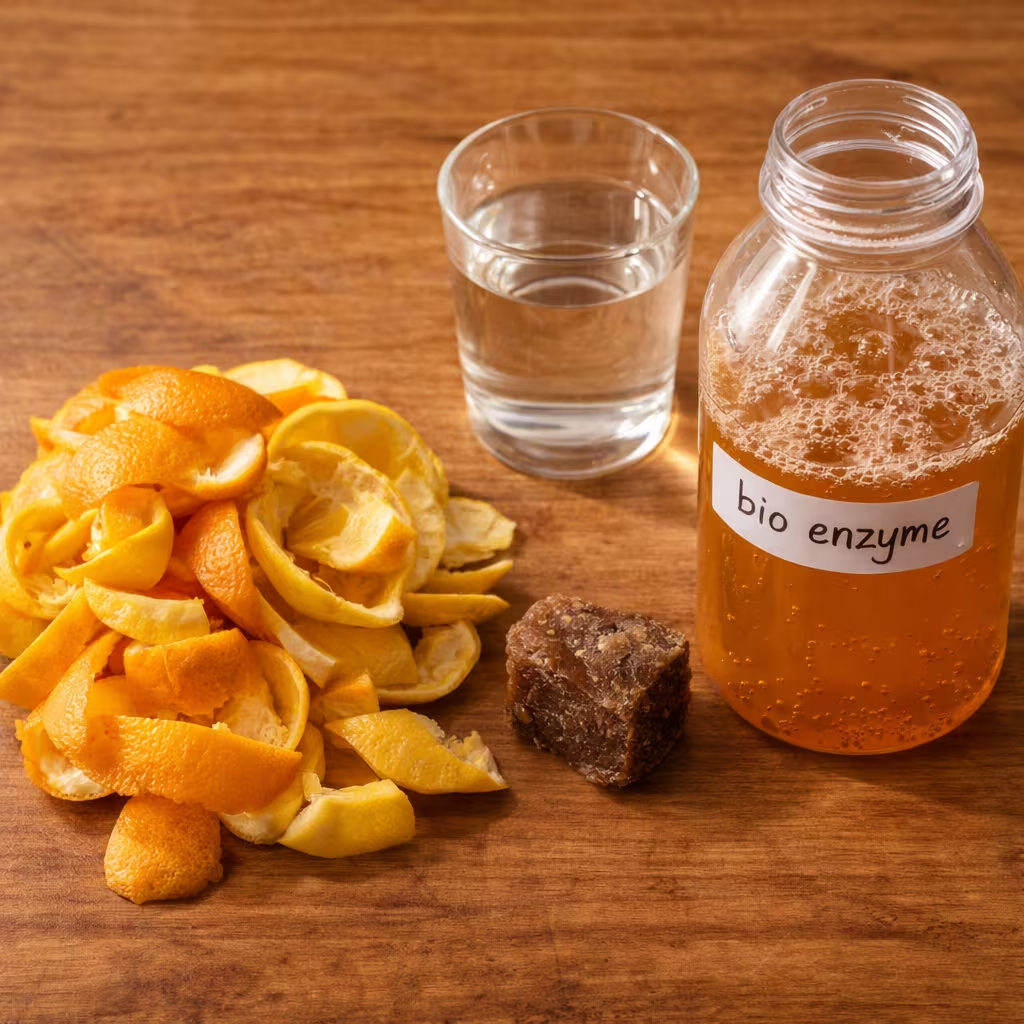
Bio-enzyme cleaners use beneficial bacteria and the enzymes they produce to break down organic compounds: soap scum, grease, urine residue, and odour-causing bacteria. They do not disinfect like bleach, but they clean organic buildup effectively and leave no harmful residue. The standard recipe uses a 1:3:10 ratio of jaggery, citrus peels, and water.
Ingredients:
- 1 part jaggery (or brown sugar)
- 3 parts citrus peels (lemon, mosambi, orange, or any mix)
- 10 parts water
- One wide-mouth plastic bottle (glass can crack from CO2 pressure build-up)
Method:
- Roughly chop the citrus peels and add to the bottle
- Dissolve the jaggery in the water, then add to the bottle
- Fill to no more than 75% capacity to allow for gas expansion
- Seal loosely for the first week to release CO2, or open briefly each day
- Leave in a dark, warm place for 30 to 40 days. White foam is normal. A black fungal layer means contamination: discard and restart
- Strain after 40 days. The clear amber liquid is your bio-enzyme cleaner. Store for up to 6 months
How to use it: Undiluted in the toilet bowl (pour around the rim, leave 15 minutes, brush and flush). Diluted 1:10 with water as a tile and floor spray. Full-strength on grout lines with a brush for soap scum.
Quick Fact
Adding one teaspoon of dry yeast to the mixture during the first week accelerates fermentation and reduces ready time to 30 days. The yeast provides an immediate microbial culture that jaggery and peels would otherwise take longer to develop on their own.
Indian Eco Brands Worth Buying: a Neutral Comparison
For readers who want a ready-to-use option, the following Indian brands make natural bathroom cleaners. This comparison is neutral and based on published product information and 2025 pricing.
| Brand | Product | Key Ingredients | Free Of | Price | Best For |
|---|---|---|---|---|---|
| Born Good | Toilet Bowl Cleaner | Citric acid, coconut extract, palm oil surfactant | HCl, bleach, chlorine | Rs 199 / 500ml | Toilet bowl, daily disinfection |
| Satopradhan | Bio-Enzyme Toilet Cleaner | Bio-enzyme concentrate, citrus extracts | HCl, bleach, synthetic fragrance | Rs 350 / 750ml | Organic staining, odour control |
| Koparo | Bathroom Cleaner | Plant-based surfactants, essential oils | Chlorine, phosphates, parabens | ~Rs 249 / 500ml | Tiles, sinks, taps |
| Beco | Toilet Cleaner | Plant-derived acids, natural surfactants | HCl, bleach | Rs 130 to Rs 170 / 500ml | Budget-friendly daily use |
| Happy Planet | Toilet Cleaner | Organic acids, non-ionic surfactants | HCl, bleach, SLS | Rs 199 / 500ml | Indian-style and western pans |
Tip
Born Good’s 1-litre refill pouch (Rs 319) reduces per-use cost and eliminates a plastic bottle. Satopradhan’s 1.9-litre can works out to Rs 185 per litre and is the most economical option for households cleaning two or more bathrooms.
What Never to Mix
Baking Soda and Vinegar: More Fizz Than Clean
When baking soda (pH ~9) meets vinegar (pH ~2.5), they neutralise each other immediately. The reaction produces water, carbon dioxide, and sodium acetate. As ABC Science explains, the fizzing is CO2 escaping and it looks powerful but achieves almost nothing. Use each separately: vinegar on mineral deposits and limescale; baking soda as an abrasive paste on grout and stubborn surface marks.
Bleach and Any Acid: Produces Chlorine Gas
Mixing sodium hypochlorite (Domex, any bleach) with an acid, including vinegar, citric acid, lemon juice, or HCl-based toilet cleaners, releases chlorine gas. At low concentrations in a poorly ventilated bathroom this causes burning eyes, throat irritation, and respiratory distress within minutes. Never combine bleach with any acid-based cleaner, including natural ones.
Bleach and Ammonia: Produces Chloramine Vapour
Some commercial floor cleaners and glass cleaners contain ammonia. Mixing these with bleach produces chloramine, another toxic gas with similar respiratory effects. Check product labels before using multiple cleaners in the same bathroom session.
Important
If you accidentally mix bleach with an acid or ammonia, leave the bathroom immediately. Open all windows and doors and ventilate for at least 30 minutes before re-entering. Do not attempt to neutralise or clean up the mixture while still inside the confined space.
The Bottom Line
Your Indian bathroom needs acid-based cleaners to deal with hard water deposits, and that acid does not need to be hydrochloric. White vinegar, citric acid powder, and a citrus bio-enzyme made from leftover fruit peels all dissolve limescale as effectively as Harpic, without the fumes, the corrosive skin risk, or a warning label classifying the product as a Category 1 corrosive. The switch fails when people reach for baking soda as a one-size-fits-all solution. Understand what each surface needs and the swap becomes permanent.
FAQs
Is White Vinegar Safe to Use on All Bathroom Surfaces?
No. White vinegar is safe on glazed ceramic tiles, chrome fittings, toilet porcelain, and glass. Do not use it on marble, granite, or any natural stone tiles: acetic acid permanently etches stone surfaces. Also avoid prolonged repeated use on grout, as extended acid exposure degrades grout mortar over time.
How Long Does a Citrus Bio-Enzyme Cleaner Last After Making It?
Up to six months in a sealed bottle at room temperature, away from direct sunlight. After six months, enzyme activity decreases significantly. Label your bottle with the straining date.
Does Natural Cleaning Actually Disinfect? Will Bacteria Build Up?
White vinegar has mild antibacterial properties but does not disinfect at the level of bleach. For a bathroom used by healthy adults, this is generally adequate. If someone in the household has an active infection or a compromised immune system, use a commercially tested natural disinfectant such as Born Good or Satopradhan, both of which carry lab-verified disinfectant claims.
Can I Use These Methods on Indian-Style Squatting Toilets?
Yes. The same citric acid solution or vinegar applies to Indian-style pans. Pour around the stained areas, leave for 15 minutes, scrub with a stiff brush, and flush. For the footrest surfaces, apply a baking soda paste for abrasive cleaning of soap and mineral scum.
Where Can I Buy Citric Acid Powder in India?
Citric acid powder is available as a food-grade ingredient at most kiranas, DMart, Reliance Smart, baking supplies shops, and online at Amazon India, Flipkart, and BigBasket. It costs Rs 80 to Rs 150 per 500g. The food-grade version is identical to cleaning-grade citric acid.