- Not all kitchen plastics carry equal risk. Those touching hot, oily, or acidic food need to go first. Start there, not with shopping bags.
- India’s own dabba culture, kirana stores, and steel bartan tradition already give you most of what you need. Going plastic-free is largely a return, not a reinvention.
- A complete kitchen swap from plastic to steel, glass, and wood costs Rs 2,000 to Rs 4,000 spread over six months, and most alternatives cost less per year than the plastic they replace.
- A single plastic tea bag at 95°C releases up to 11.6 billion microplastic particles into one cup, making your chai setup the highest-priority invisible plastic problem in your kitchen.
Plastic crept into the Indian kitchen slowly. First the steel dabba got replaced by a plastic tiffin. Then the kansa thali gave way to melamine. Then came plastic wrap, plastic spice jars, plastic cutting boards, and non-stick pans with plastic handles resting on high-heat gas flames. The result is a kitchen where plastic touches hot food at almost every step of cooking and storage. Switching out does not require a weekend haul at an expensive sustainable goods store. Most replacements are cheaper over time, available at your local bartan shop or kirana, and some of them were already in your grandmother’s kitchen.
In This Article
- Why your Indian kitchen is already more plastic-free than you think
- The plastics that matter most: a heat-risk priority list
- Zone 1: The cooking station
- Zone 2: Food storage and the dabba upgrade
- Zone 3: The grocery and packaging problem
- Zone 4: Water and beverages
- The real cost of switching
- How to dispose of outgoing plastic responsibly in India
- FAQs
Why Your Indian Kitchen Is Already More Plastic-Free Than You Think
The steel tiffin box, the masala dabba, the kansa thali, the clay matka, the brass kadhai. India had a complete, zero-plastic kitchen long before plastic arrived. These traditions exist because they worked: steel does not leach, brass has natural antimicrobial properties, and a clay matka keeps water cooler than any plastic bottle.
The problem is not that Indian kitchens lack plastic-free options. The problem is that two decades of aggressive plastic marketing replaced serviceable traditional items with cheaper, flashier plastic versions. A stainless steel masala dabba costs Rs 350 to Rs 600 and lasts decades. Its plastic equivalent costs Rs 80, cracks within two years, and adds microplastics to every pinch of turmeric you pull from it.
Going plastic-free in an Indian kitchen does not require adopting European zero-waste habits or buying imported beeswax wraps. It means recovering what was already here.
Quick Fact
India produces approximately 9.3 million tonnes of plastic waste per year, making it the world’s largest plastic polluter by volume, according to a 2025 analysis. A significant portion comes from single-use food packaging: the atta bags, dal pouches, and oil bottles that pass through every Indian kitchen every week.
The Plastics That Matter Most: a Heat-Risk Priority List
Not all plastic in your kitchen carries the same risk. Plastic leaches chemicals and microplastics into food, but the rate of leaching increases dramatically with heat, fat content, acidity, and scratching. A cold-storage plastic container for dry fruits poses far less risk than a scratched plastic spatula used over a 200-degree gas flame.
Replace these first (high heat, direct food contact):
- Non-stick pans with PTFE or Teflon coating, particularly older or scratched pans
- Plastic spatulas and ladles used over direct flame
- Plastic-handled kadhai and tawa exposed to gas flame heat
- Plastic tiffins used to pack hot food straight from the stove
- Plastic cutting boards (microplastics from chopping transfer directly into food)
- Plastic tea bags steeped in boiling water
Replace next (regular food contact, acidic or oily content):
- Plastic masala dabbas and spice jars (acidic spices like amchur and tamarind paste accelerate leaching)
- Plastic containers for dal, rice, and atta storage
- Plastic water bottles and jugs stored in warm kitchens
Deprioritise for now (lower risk):
- Plastic bags in the freezer for dry goods that are never heated
- Plastic lids on containers holding cold, non-acidic food
Important
India’s ICMR and National Institute of Nutrition (NIN) explicitly advised against non-stick cookware in the revised Dietary Guidelines for Indians, citing health risks from PFOA and PFOS found in Teflon coatings. If your non-stick pan is scratched, chipped, or was bought before 2014, replace it this month.
Zone 1: The Cooking Station
The cooking station is where plastic faces the highest heat in your kitchen, and therefore where the risk is greatest. Three categories to address: cookware, utensils, and the cutting board.
Cookware
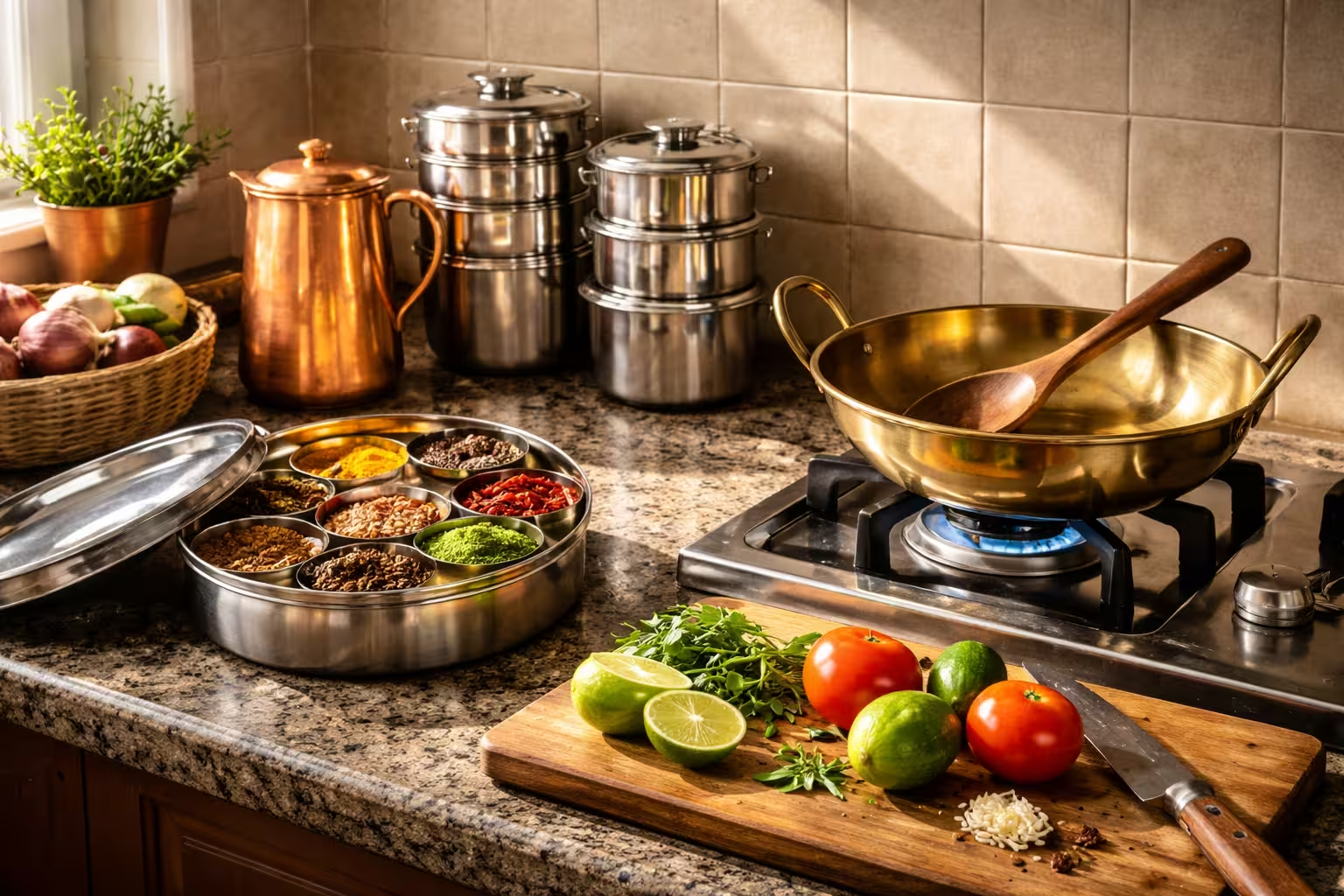
The switch from non-stick to cast iron, stainless steel, or carbon steel is the most significant plastic-free move you can make in an Indian kitchen. These materials handle the high heat of Indian cooking, including tadka oil at 180 to 200 degrees, deep frying, and pressure cooking, without releasing anything into your food.
| Cookware | Cost (Rs) | Lifespan | Notes |
|---|---|---|---|
| Stainless steel kadhai (28cm) | Rs 400 to Rs 800 | 20+ years | Best all-rounder for Indian cooking |
| Cast iron tawa | Rs 600 to Rs 1,200 | Lifetime | Needs seasoning; excellent for rotis and dosas |
| Steel pressure cooker (Prestige/Hawkins) | Rs 800 to Rs 1,800 | 15+ years | Replace rubber gasket every 2 to 3 years |
| Non-stick tawa (Teflon, for comparison) | Rs 400 to Rs 700 | 2 to 4 years | Replace when scratched; PTFE risk increases |
A cast iron tawa costs Rs 700 once and lasts a lifetime. A non-stick tawa at Rs 500 needs replacement every two to three years. Over ten years, the cast iron is cheaper.
Utensils and Cutting Boards
Replace plastic spatulas and ladles with stainless steel or wooden alternatives. A set of four stainless steel cooking utensils costs Rs 200 to Rs 400. A wooden spoon from a local kitchenware shop costs Rs 50 to Rs 150 and is gentler on cookware surfaces. For cutting boards, switch to solid wood or bamboo. Research on polyethylene cutting boards found that chopping vegetables on a plastic board releases microplastics directly into food, with harder vegetables like carrots producing more transfer than softer ones.
Tip
If your non-stick pan is unscratched and you cannot replace it yet, keep using it. The risk from PTFE increases significantly once the coating is damaged. Use wooden or steel utensils only, keep heat below medium, and plan a replacement within the next six months.
Zone 2: Food Storage and the Dabba Upgrade
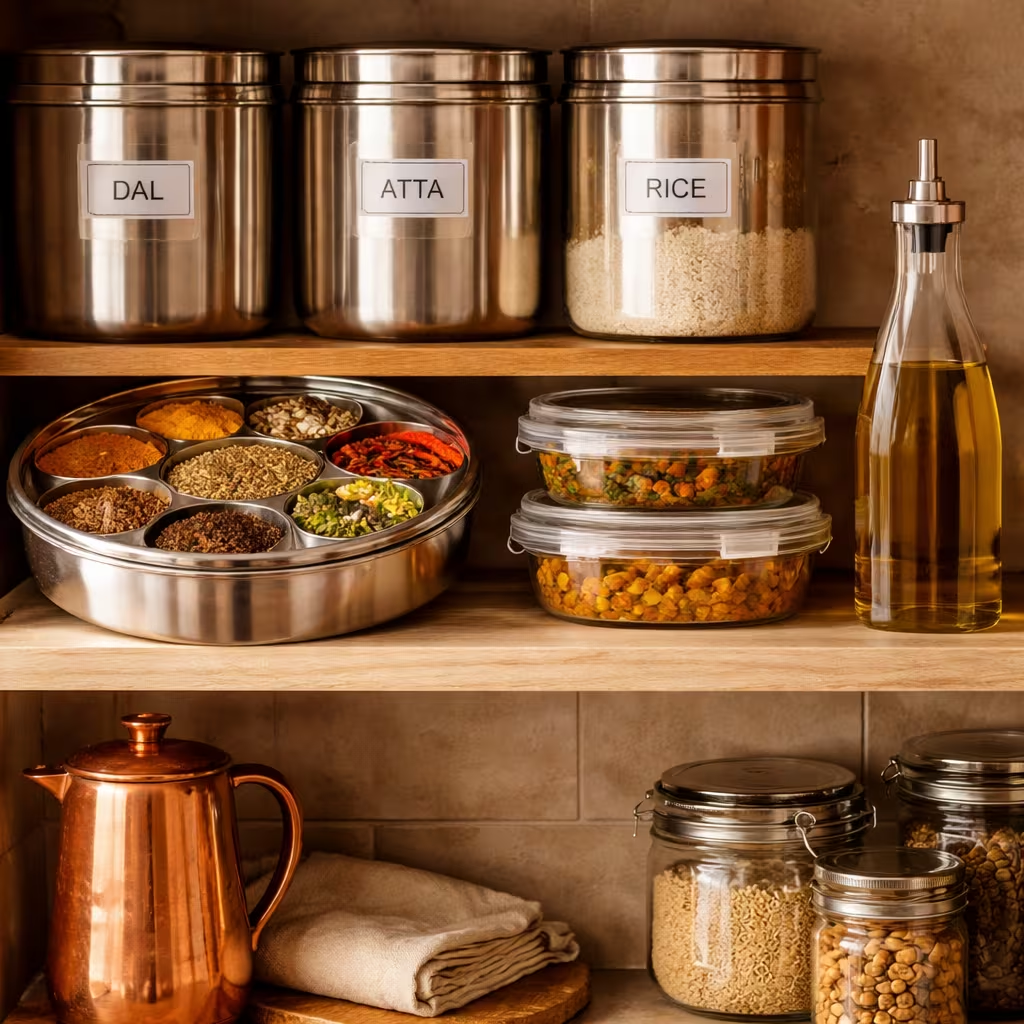
The Indian kitchen runs on dabbas. The steel dabba, used correctly, is one of the most sustainable food storage tools in the world. It requires no refrigeration for dry goods, does not leach, does not absorb odours, does not crack, and a set of six steel dabbas costs Rs 300 to Rs 600.
The problem is that most Indian kitchens now store food in repurposed ice cream tubs, thin plastic pouches, and containers not designed for long-term food contact. The complete storage swap:
| Storage Use | Plastic Version | Alternative | Cost (Rs) |
|---|---|---|---|
| Dal, rice, atta | Plastic airtight boxes | Stainless steel canisters or dabbas | Rs 80 to Rs 200 per piece |
| Spice storage | Plastic masala dabba | SS masala dabba (7-compartment) | Rs 350 to Rs 600 |
| Fridge leftovers | Plastic boxes | Borosilicate glass with clip lids | Rs 150 to Rs 400 per piece |
| Packed lunch | Plastic tiffin | Steel tiffin (Vaya, Milton, local brand) | Rs 400 to Rs 900 |
| Oil storage | Plastic bottle | Glass bottle or steel dispensing can | Rs 200 to Rs 500 |
For refrigerator storage of cooked food, borosilicate glass containers from Treo or any glass bartan store cost Rs 150 to Rs 400 per piece, last indefinitely, and are safe for microwave reheating without leaching.
Quick Fact
Storing hot food in plastic containers accelerates microplastic leaching significantly. A 2026 analysis of prior studies found that hot coffee in a plastic cup releases thousands more microplastic particles than cold coffee in the same cup. The same principle applies to packing a hot dal or sabzi directly into a plastic tiffin.
Zone 3: The Grocery and Packaging Problem
The biggest source of plastic in an Indian kitchen is not your containers or utensils. It is the packaging that groceries arrive in: atta in a plastic woven bag, dal in a heat-sealed pouch, oil in a plastic bottle, masalas in individual sachets, and vegetables wrapped in cling film at the supermarket.
This is where the kirana store and sabzi mandi become the most powerful plastic-free tools available to an Indian household. Here is what you can buy package-free today:
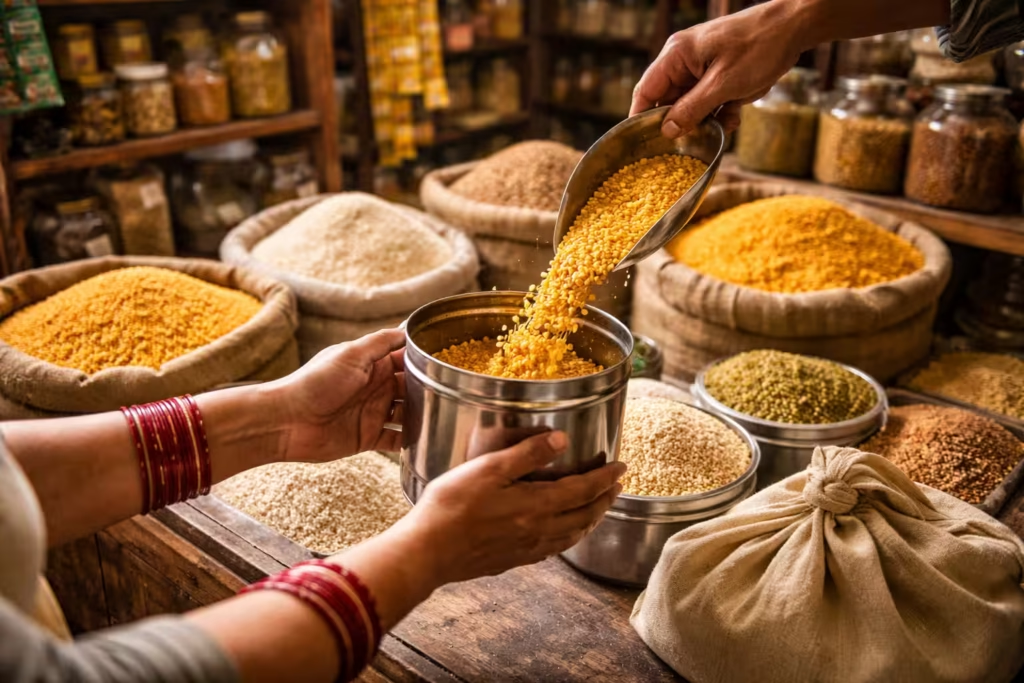
- Atta and rice: Most kirana stores will weigh and pack loose grain into your own cloth bag or steel container. Ask once and they almost always agree.
- Dal and pulses: Buy loose dal from the kirana or a wholesale grain market. Store in your steel dabbas at home.
- Masalas: Whole spices (jeera, rai, haldi root, black pepper) from the local masala shop come package-free if you bring your own container. Many larger kiranas sell ground spices from bulk bins.
- Oil: Local oil mills and refilling stores in cities like Bengaluru, Hyderabad, Chennai, and Mumbai allow you to refill your own glass or steel container with groundnut or sesame oil at lower cost than bottled brands.
- Vegetables: The sabzi mandi sells loose vegetables without packaging. Plastic-wrapped vegetables in supermarkets are a choice, not a necessity.
Tip
Keep two cloth bags and one spare steel dabba near your kitchen door. Pick them up every time you leave for the kirana or market. The swap costs nothing if you already own a cloth bag and any spare steel container. You eliminate 3 to 5 plastic pouches per grocery run.
Zone 4: Water and Beverages
Water storage
Plastic water bottles and pitchers stored in a warm Indian kitchen gradually leach plasticisers, particularly in summer when kitchen temperatures can reach 35 to 40 degrees. Switch to a steel or copper water jug for counter storage and a borosilicate glass pitcher for the refrigerator. A 1-litre copper jug costs Rs 350 to Rs 600 and carries added antimicrobial properties confirmed in multiple peer-reviewed studies.
Chai and plastic tea bags
This is the single most underreported plastic problem in the Indian kitchen. Research published in Environmental Science and Technology by McGill University found that steeping a single plastic tea bag at 95°C releases approximately 11.6 billion microplastic and 3.1 billion nanoplastic particles into a single cup. A follow-up study published in December 2024 by the Autonomous University of Barcelona found that polypropylene tea bags release approximately 1.2 billion particles per millilitre of hot water.
Most loose-leaf chai used in Indian homes is already plastic-free. The risk comes from sachet-format branded tea bags. If you make chai the traditional way with loose-leaf tea and a strainer, you already avoid this entirely.
Important
Check your tea bags. Most branded tea bags in the Indian market use nylon or polypropylene mesh. If the tea bag has a silky or mesh-like texture rather than paper, it contains plastic. Switch to paper-based or loose-leaf chai to eliminate this source of microplastics entirely.
The Real Cost of Switching
The most common reason Indian households do not switch from plastic is cost. Here is what the numbers actually show:
| Item | Plastic (Rs) | Lifespan | Alternative (Rs) | Lifespan | Cost/Yr Plastic | Cost/Yr Alternative |
|---|---|---|---|---|---|---|
| Masala dabba (7 compartments) | Rs 80-150 | 2 years | Steel: Rs 350-600 | 20+ years | Rs 55-75 | Rs 18-30 |
| Spatula set (4 pieces) | Rs 120-200 | 2 years | Steel: Rs 200-400 | 15+ years | Rs 80 | Rs 20 |
| Tawa | Rs 400-700 | 3 years | Cast iron: Rs 700-1,200 | Lifetime | Rs 180 | Rs 35 |
| Tiffin box | Rs 80-150 | 2 years | Steel: Rs 400-600 | 15+ years | Rs 60 | Rs 33 |
| Food storage (6 pieces) | Rs 300-500 | 3 years | Steel dabbas: Rs 500-900 | 20+ years | Rs 130 | Rs 35 |
Total first-year switching cost: Rs 2,150 to Rs 4,100. Total annual cost after year one: under Rs 200. Annual cost of replacing plastic equivalents on their normal cycle: Rs 505 to Rs 640, every year. The switch pays for itself by year three.
How to Dispose of Outgoing Plastic Responsibly in India
Switching to plastic-free does not mean throwing existing plastic in the bin. That just moves the problem downstream.
- Do not discard usable plastic. If the container is unscratched and functional, continue using it until it genuinely needs replacement. The most sustainable option is always to use what you already own.
- Donate to local waste pickers or kabadiwalas. Rigid plastic (PP, HDPE, PET) has recycling value. Your kabadiwala will collect it and route it to a recycler.
- Use I Got Garbage or Recykal apps. These platforms connect Indian households to verified recyclers for hard-to-recycle plastic, available in most major cities.
- Check brand EPR programmes. Under India’s Extended Producer Responsibility rules, major FMCG brands must collect and recycle plastic packaging. Several run take-back programmes. Check the brand’s website before discarding.
The Bottom Line
The Indian kitchen already had all the answers before plastic arrived. Steel dabbas, kirana store bulk buying, loose-leaf chai, clay pots: none of this is new. The shift back to these habits costs less over time than staying with plastic, and it removes a daily source of microplastic exposure from your cooking and storage. You do not need to do everything at once. Replace the spatulas this week, swap the tawa when the current one wears out, and bring a cloth bag to the kirana on your next visit.
FAQs
Is stainless steel completely safe for food storage?
Yes. Food-grade stainless steel (grade 304 or 316) does not leach into food under normal storage or cooking conditions. It is the same material used in professional kitchens globally. Avoid cheap steel with no grade marking, which may contain lower-quality alloys.
Can I use copper vessels for cooking or just for storage?
Copper is best for water storage, not cooking. Copper reacts with acidic foods like tomatoes, tamarind, and citrus, releasing copper ions into food in amounts that can cause nausea at high doses. Store water in copper, but cook in steel or cast iron.
What about Tetra Pak and paper packaging — are those plastic-free?
No. Tetra Pak cartons are laminated with multiple layers including polyethylene plastic. They are better than single-use plastic bottles but not plastic-free. Paper packaging lined with plastic (including many chips packets and instant noodle wrappers) also contains plastic. The safest option is always unpackaged food from the kirana or market.
How do I store leftover sabzi and dal without plastic in the fridge?
Borosilicate glass containers with clip or silicone-sealed lids work well for fridge storage. Steel dabbas also work for short-term storage of cooked food. Both are widely available at Indian kitchenware stores and on Amazon India. Avoid placing hot food directly into sealed glass containers as thermal shock can crack thinner glass.
Are silicone products a safe plastic-free alternative?
Silicone is not plastic but a synthetic rubber. Food-grade silicone (100% silicone, not silicone-coated plastic) is considered safe for food contact up to around 200 degrees. It is a reasonable transitional swap for lids, spatulas, and ice trays. Opt for food-grade certified products from reputable brands.