
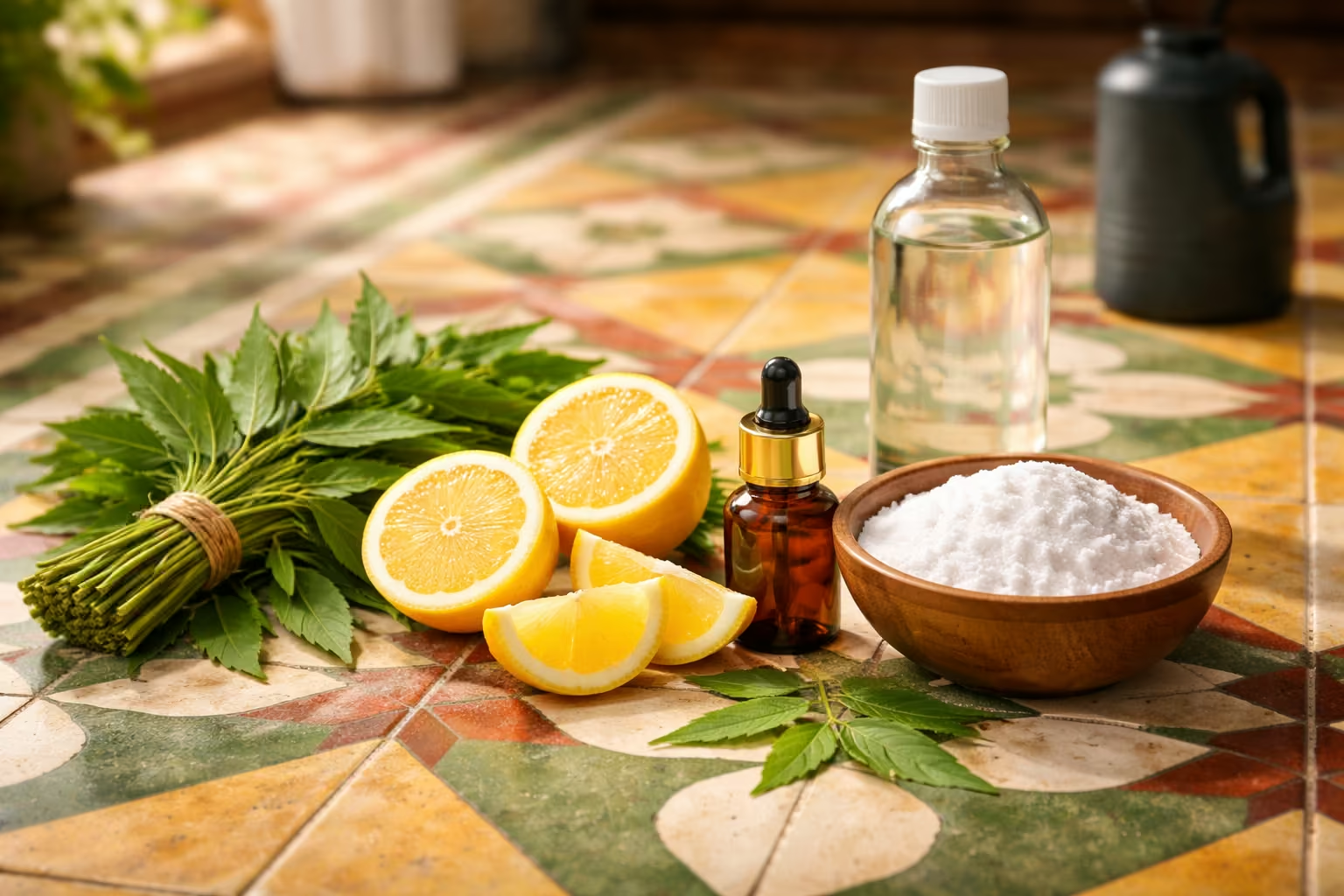
The sharp, sweet-tar smell of phenyl has become synonymous with clean floors in Indian homes. Most families use it without question since it is cheap, widely available, and produces an immediate sense of hygiene. But that smell is phenol vapour, a classified toxin that absorbs through the skin and lungs with every mopping session.
This guide walks you through exactly what is in standard phenyl, why it matters for your household’s health, and how to replace it with options that are cheaper per litre, safe for children and pets, and effective on Indian floors, including hard water stains, haldi spills, and marble.
Contents
- What phenyl actually is — and what it is doing to your home’s air
- The health case for switching
- Which floor types need which cleaner
- DIY floor cleaner options for Indian homes
- The best natural floor cleaner brands in India
- Cost comparison: phenyl vs. natural alternatives
- How to make the switch this week
What is Phenyl and What it is Doing to Your Home’s Air
“Phenyl” is the generic Indian trade name for a category of floor cleaning concentrates whose active ingredient is phenol, also known as carbolic acid. Most standard phenyl products sold in India (white phenyl, pine phenyl, and their variants) contain phenol concentrations ranging from 1% to 5%, mixed with pine oil or synthetic fragrance, emulsifiers, and water.
Phenol is a volatile organic compound (VOC). At room temperature, it evaporates readily into the air and can be detected by smell at concentrations as low as 0.05 ppm. When you mop a floor with a phenyl solution in a closed Indian apartment, a typical 2BHK with limited cross-ventilation, the indoor phenol concentration spikes within minutes and takes 3 to 4 hours to return to baseline, even with windows open.
Quick Fact
Phenol is listed as a Poison B by the US Department of Transportation and is classified by the UK’s Health Security Agency as a substance that “may cause toxicity at the site of contact and systemically, by all routes of exposure”, including inhalation, skin contact, and ingestion. The sweet-tar smell you associate with a freshly mopped floor is phenol vapour entering your respiratory tract.
Phenol is not the only harmful ingredient. Most phenyl products also contain synthetic fragrance (undisclosed phthalates and VOCs), surfactants derived from petroleum, and artificial colourants. None of these are required to clean a floor. They are present because they are cheap fillers that produce a sensory impression of strength and cleanliness.
The health case for switching
The risks of phenyl are dose-dependent and cumulative. A single mopping session in a well-ventilated space carries low acute risk. The problem is that most Indian homes mop daily or every other day, often in enclosed spaces, and without gloves. For domestic workers who handle concentrated phenyl solutions for 2 to 3 hours every day, the cumulative exposure is clinically significant.
Skin absorption: Phenol absorbs through intact skin. Chronic dermal exposure is linked to skin inflammation, ochronosis (skin darkening), and, in studies of workers exposed to phenol concentrations above 20 mg/m³ for 13 or more years, measurable liver toxicity and changes in blood chemistry. Phenol’s dermal absorption rate is high enough that the UK Government’s toxicological guidance explicitly warns against routine skin contact without protective equipment.
Respiratory exposure: Acute inhalation causes wheezing, respiratory tract irritation, headache, and salivation. Chronic inhalation at low concentrations, exactly the level produced by regular residential mopping, is associated with weight loss, muscle weakness, and liver enzyme elevation. Children and the elderly are disproportionately affected because they spend more time at floor level, where phenol vapour concentrates in the first 30 to 45 cm of air.
Ingestion risk: Toddlers and infants crawl and mouth objects from freshly mopped floors. Phenol residue on tile surfaces does not disappear after drying — it remains until rinsed. Most standard mopping routines do not include a rinse step.
Important
If you have children under five, pets, or a household member with asthma or respiratory sensitivity, phenyl-based floor cleaners represent a daily exposure risk that is entirely avoidable. Natural alternatives clean floors just as effectively and eliminate this exposure completely.
Which floor types need which cleaner
Indian homes use several distinct floor types, and the right natural cleaner depends on the surface. Using the wrong ingredient, even a natural one, can dull finishes or cause surface damage over time.
| Floor type | Best natural cleaner | Avoid | Notes |
|---|---|---|---|
| Vitrified tiles | Diluted white vinegar (1:4) or reetha liquid | Nothing critical; avoid excess soap | Most forgiving surface; handles vinegar and bio-enzyme cleaners well |
| Marble and limestone | Castile soap or reetha, plain warm water | Vinegar, lemon, citric acid | Wooden/engineered wood |
| Granite | Diluted castile soap or plant-based floor cleaner | Undiluted vinegar | Diluted vinegar (1:10 or more) is generally safe; undiluted risks finish dulling |
| Kota stone | Reetha liquid or diluted vinegar | Strong acids undiluted | Mild acid in dilution is fine for regular cleaning |
| Cement/oxide floors | Castile soap in warm water, wrung-dry mop | Vinegar, excess water | Acid weakens wood finish over time; excess moisture causes warping |
| Cement / oxide floors | Baking soda solution or reetha liquid | Strong acids | Porous surface; avoid sticky residue |
DIY floor cleaner options for Indian homes
Three DIY formulas cover the full range of Indian household needs. All ingredients are available at kirana stores, pharmacies, or supermarkets. Total cost per batch is under Rs 30.
Everyday all-floor cleaner (vitrified tiles, Kota stone, granite)
- 1 litre of warm water
- 2 tablespoons white vinegar
- 5 drops tea tree oil (optional — antibacterial boost)
- 3 drops lemongrass or eucalyptus essential oil (optional — fragrance)
Add to mop bucket. Mop as usual. No rinse needed at this dilution. Cost per litre: approximately Rs 3 to Rs 5. Do not use on marble or wooden floors.
Marble-safe cleaner
- 1 litre of warm water
- 1 teaspoon castile soap or 2 tablespoons reetha liquid (boiled and strained)
- 3 drops lavender or rose essential oil (optional)
Safe for marble, limestone, and polished stone. Mop with a wrung-dry mop to avoid excess moisture. Reetha liquid can be made at home by boiling 8 to 10 soapnuts in 500ml water for 15 minutes, then straining.
Deodorising floor cleaner (kitchens, bathrooms, pet areas)
- 1 litre of warm water
- 2 tablespoons white vinegar
- 1 tablespoon baking soda (add last — it will fizz briefly)
- 10 drops of lemongrass oil
The baking soda neutralises stubborn odours from kitchen spills, pet accidents, and bathroom floors. Use fresh — do not store this formula, as the fizzing reaction gradually loses effectiveness.
Tip
To make reetha floor cleaner in bulk: boil 20 to 25 soapnuts in 1 litre of water for 20 minutes. Cool, strain, and store in a sealed bottle in the refrigerator for up to 10 days. Dilute 1:5 in your mop bucket. One batch costs approximately Rs 20 and makes 6 litres of usable floor cleaner.
The best natural floor cleaner brands in India
If you prefer a ready-made product, these brands are widely available, reliably formulated, and offer good value once you account for dilution ratios. All prices are current as of early 2026.
| Brand | Key ingredients | Best for | Price | Buy from |
|---|---|---|---|---|
| Koparo Clean | Coconut-based surfactant, tea tree oil | All tiles; child and pet-safe homes | Rs 299 (500ml) / Rs 359 (2L) | Amazon India, own website |
| Born Good | Neem, tulsi, coconut, citrus extracts | All hard floors; USDA Biobased certified | Rs 299 (950ml) | Amazon India, Flipkart |
| Herbal Strategi | Ayurvedic plant extracts, lemongrass | Sensitive households; AYUSH certified | Rs 116–250 (500ml–1L) | Amazon India, own website |
| Patanjali Gonyle | Gomutra (distilled), lemongrass, eucalyptus, pine oil | Budget households; insect-repellent action | Rs 75 (1L) | Patanjali stores, Amazon India |
| HolyWaste Raksha | Floral bio-enzymes from upcycled flower waste | Eco-conscious buyers; child/pet households | Rs 249–399 | Own website, Amazon India |
| Goli Soda | Probiotic-based, plant-derived surfactants | Long-term odour control; bio-enzyme action | Rs 240–350 | Amazon India, select stores |
Tip
Koparo’s 5-litre concentrate (diluted 1:10) costs approximately Rs 5 to Rs 8 per litre of usable cleaner — directly competitive with standard phenyl. Born Good and Herbal Strategi also offer concentrate formats that bring the per-litre cost below Rs 15. Always check the dilution ratio on the label before comparing prices between products.
Cost Comparison: Phenyl vs Natural Alternatives
The most common objection to switching is cost. This comparison factors in dilution ratios to show actual cost per litre of usable floor cleaner, not the sticker price on the bottle.
| Product | Purchase price | Dilution | Yield (usable litres) | Cost per usable litre |
|---|---|---|---|---|
| Standard phenyl (1L) | Rs 40–70 | 1:20 (50ml per bucket) | ~20L | Rs 2–3.5 |
| DIY vinegar cleaner (1L white vinegar) | Rs 60–80 | 2 tbsp per litre water | ~30L | Rs 2–3 |
| Reetha DIY (20 soapnuts, Rs 20) | Rs 20 | 1:5 | ~6L | Rs 3–4 |
| Koparo concentrate (5L, Rs 899) | Rs 899 | 1:10 | ~50L | Rs 5–8 |
| Born Good (950ml, Rs 299) | Rs 299 | Ready-to-use | 0.95L | Rs 31 (ready-to-use) |
| Patanjali Gonyle (1L, Rs 75) | Rs 75 | 1:20 | ~20L | Rs 3.75 |
The cost argument against switching largely disappears when you factor in concentration. DIY vinegar cleaner and reetha are cheaper per usable litre than phenyl. Concentrate-format natural brands (Koparo 5L, Herbal Strategi 1L) land at Rs 5 to Rs 8 per litre, a modest premium of Rs 2 to Rs 5 per litre over phenyl for complete elimination of chemical exposure.
How to Make the Switch This Week
You do not need to buy anything special to start. Here is the simplest possible transition:
- This week: Replace the mop bucket solution. Use 1 litre warm water + 2 tablespoons white vinegar (already in most Indian kitchens) instead of phenyl. Mop as usual. Observe results for 3 to 4 days.
- Week 2: Add 5 drops of tea tree oil or lemongrass oil to the bucket for antibacterial action. This costs approximately Rs 2 per mopping session using essential oils bought in 10ml bottles.
- When the phenyl bottle runs out: Replace it with Koparo or Herbal Strategi concentrate. Do not mix the two — use up the old product first before switching.
- Month 2 onward: Consider one bio-enzyme floor cleaner (Goli Soda or HolyWaste Raksha) for the kitchen and bathroom specifically. These areas benefit most from the long-term odour control that bio-enzyme products provide.
Tip
If you have a domestic worker, brief her that natural floor cleaners do not produce the strong carbolic smell associated with a clean floor. This is intentional. The absence of that smell is not a sign that the floor is not clean; it is a sign that there are no toxic vapours being released. Show her the results after the first few sessions, and she will adapt quickly.
Phenyl became the Indian standard for floor cleaning because it was cheap, available, and produced an immediately recognisable sensory signal. All three of those advantages have natural equivalents now. Vinegar costs less than phenyl per litre. Reetha is available at every kirana store. And the clean, faint smell of lemongrass or tea tree oil is a far better signal of a healthy floor than carbolic acid vapour. The switch takes one mopping session to make, and the health improvement begins the same day.